
India Inc Braces for Uncertainty Amid Deepening West Asia Crisis
Indian businesses are preparing for heightened uncertainty following the escalation of tensions in West Asia. The widening conflict in the Gulf region threatens to impact key sectors of the Indian economy, given the region’s strategic importance to trade, energy security, infrastructure projects and remittances.
According to brokerage firm Jefferies, the Gulf region accounts for:
- 17% of India’s total goods exports
- 55% of India’s crude oil imports
- 38% of worker remittances
With such deep economic linkages, any prolonged instability could have widespread consequences across industries.
Strait of Hormuz Disruption Raises Supply Chain Concerns
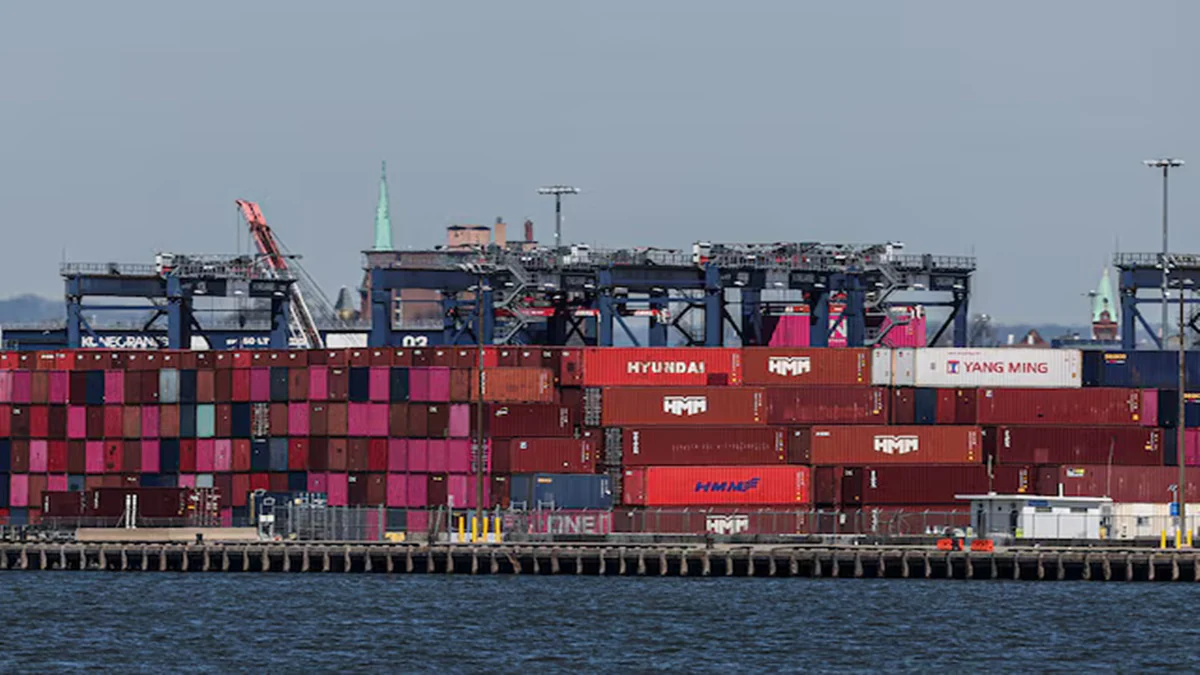
One of the biggest concerns for corporate India is the potential disruption of shipments through the Strait of Hormuz, a critical maritime chokepoint for global oil trade. Closure or restricted access to this route could sharply increase freight costs, delay shipments and disrupt supply chains.
Boardrooms across sectors are closely monitoring:
- Rising crude oil prices
- Increasing shipping and insurance costs
- Delayed cargo movement
- Volatility in commodity prices
After several quarters of commodity deflation, companies now fear renewed inflationary pressures that could eventually be passed on to consumers.
Electronics Exporters Fear Shipment Delays and Penalties
India’s electronics exporters are particularly concerned about shipment delays to the Middle East. The UAE — India’s second-largest destination for electronics exports — recorded shipments worth $4.1 billion in the first nine months of FY26. The country also acts as a major re-export hub to Africa and parts of Europe, magnifying second-order risks.
Industry leaders warn that delayed consignments could attract steep contractual penalties.
However, Pankaj Mohindroo, Chairman of the India Cellular & Electronics Association, noted that while geopolitical chokepoints may increase logistics costs and transit times, trade flows typically adjust over time as supply chains adapt.
FMCG and Paint Companies Brace for Input Cost Surge
Fast-moving consumer goods (FMCG) companies expect volatility in crude-linked derivatives, which are key raw materials for packaging, detergents, toothpaste, soaps, shampoos and hair oils.
Packaging materials and freight make up nearly 20% of total costs for some FMCG companies. A sustained spike in crude prices could lead to price revisions.
Mayank Shah, Vice-President at Parle Products, indicated that prolonged disruption may force companies to pass on increased costs to consumers. However, such price hikes could hurt the recovery in urban consumption, which has shown signs of improvement following fiscal and monetary support measures introduced last year.
Similarly, paint manufacturers rely heavily on petroleum derivatives such as titanium dioxide. These inputs constitute 55-60% of their production costs, making them highly sensitive to crude price volatility.
Infrastructure Majors Monitoring Projects in the Gulf
Indian infrastructure and engineering giants with significant exposure to West Asia are closely tracking developments.
- The Middle East contributes 37% of L&T’s ₹7.33 lakh crore order book and 33% of its year-to-date order inflows.
- KEC International has 20-25% exposure to the region in its ₹36,700-crore order book.
- Kalpataru Projects derives 11% of its ₹63,300-crore order book from the Gulf.
L&T, a major contractor in hydrocarbons projects across the Persian Gulf and eastern Saudi Arabia, stated that it is monitoring the situation in real time.
KEC International also emphasized that employee safety and regulatory compliance remain top priorities while closely following government advisories.
Experts suggest that prolonged disruption of sea lanes could delay execution timelines for infrastructure projects in the region.
Broader Economic Implications
The West Asia crisis poses three major macroeconomic risks for India:
- Energy Security Risk: Dependence on Gulf crude supplies.
- Trade Disruption Risk: Potential slowdown in exports and re-exports.
- Remittance Risk: Gulf economies account for a substantial share of worker remittances to India.
If tensions escalate further, India may face:
- Higher inflation
- Pressure on the current account deficit
- Increased freight and insurance premiums
- Slower corporate earnings growth
Outlook: Adjustment Likely but Volatility to Persist
While companies expect supply chains to eventually adapt, the near-term outlook remains uncertain. Much will depend on the duration and intensity of the conflict and whether shipping routes remain operational.
For now, India Inc is in a wait-and-watch mode — balancing cost pressures, safeguarding overseas projects and preparing contingency plans in case the crisis deepens further.

 By
By